Small footprint
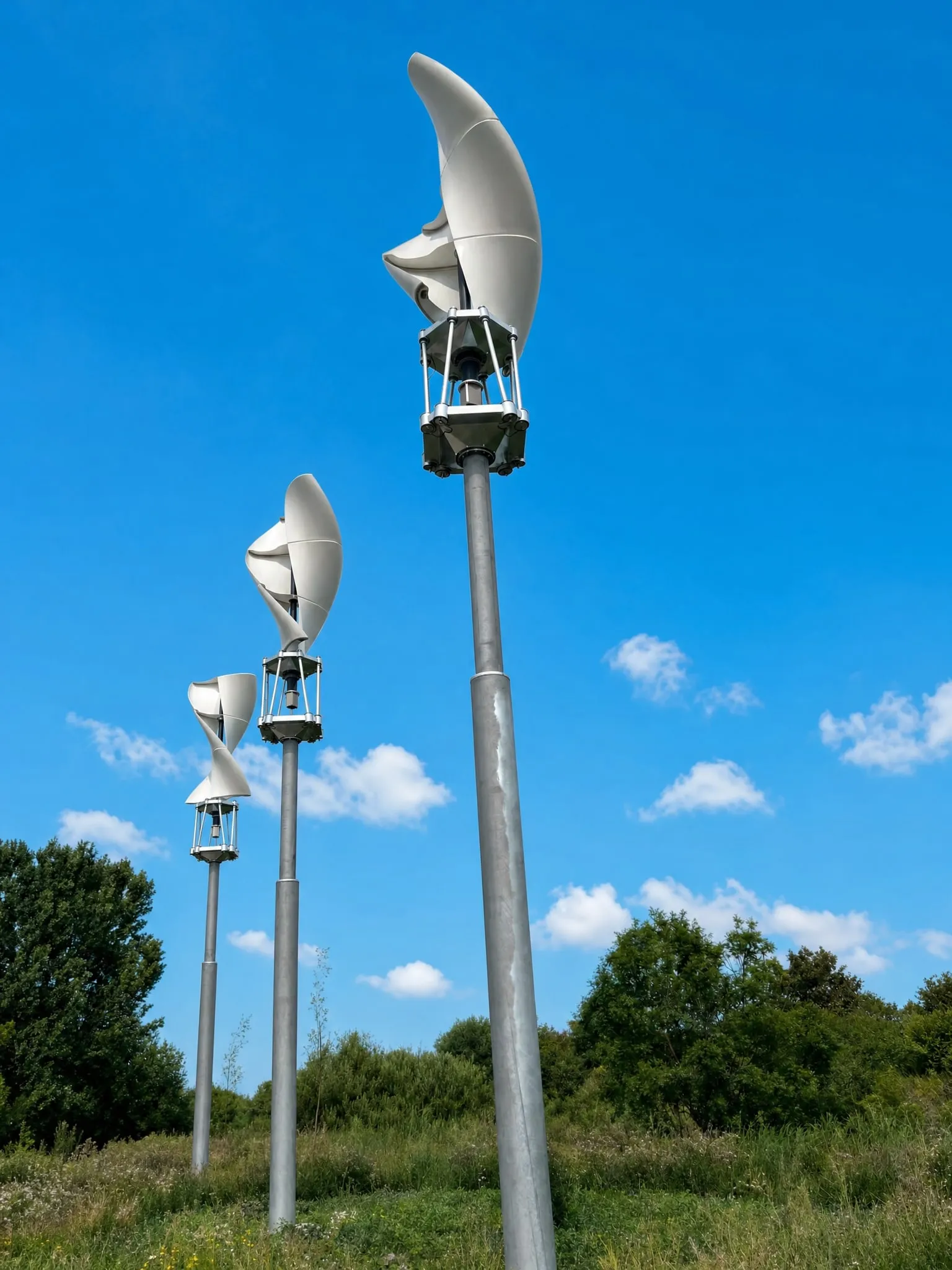
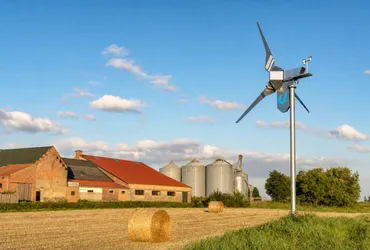
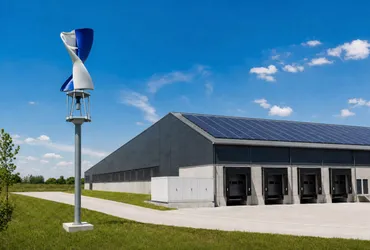
A small wind turbine stands on a mast or foundation of a few square metres. The vertical LS Helix 3.0 has a diameter of 2.2 m and can also be mounted on buildings.


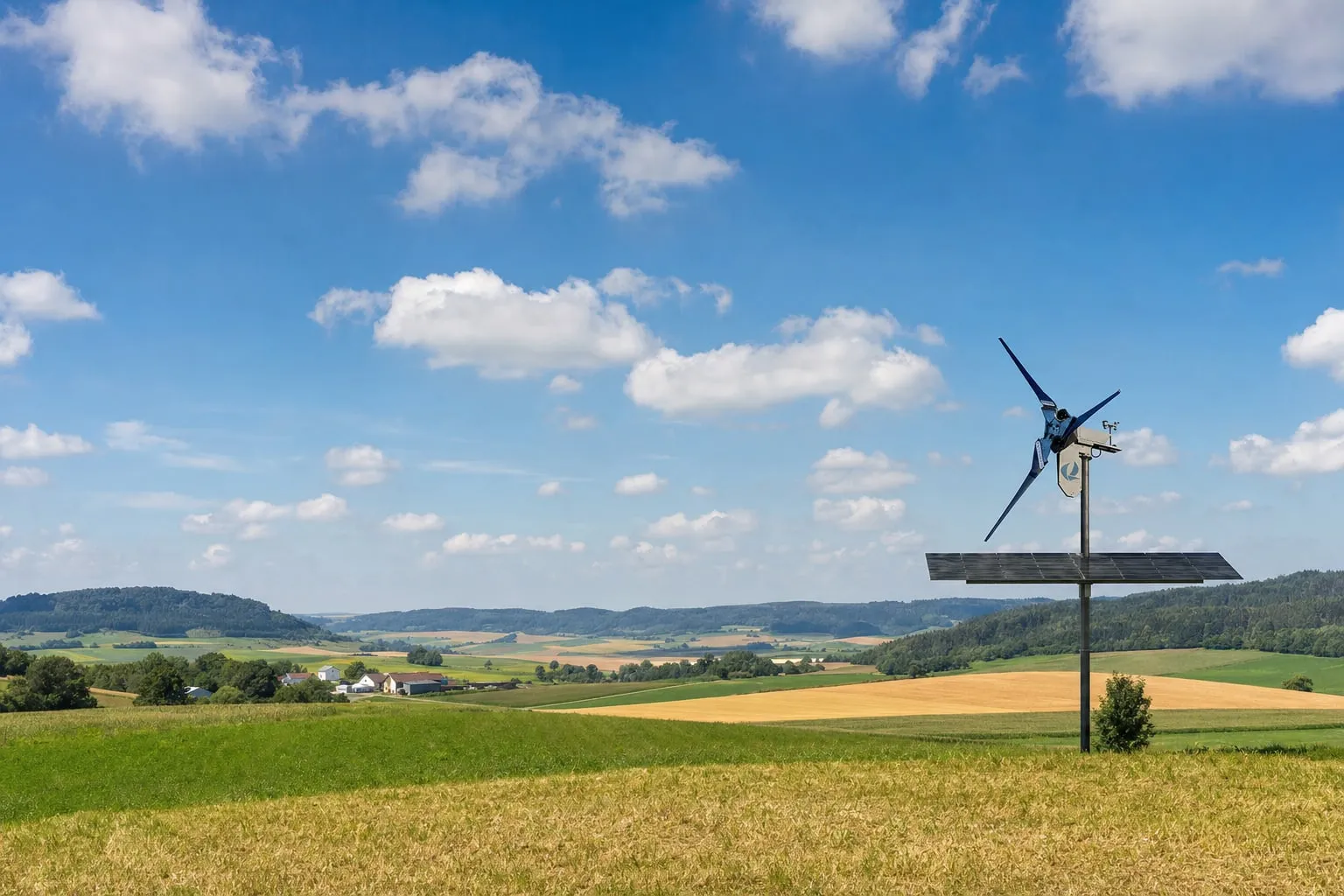
Agrivoltaics combines farming and solar power on the same land: PV modules are mounted high above the crops or in rows between them, and cultivation continues. A wind turbine on the same site adds power at night, on cloudy days and in winter. Farms supply barns and buildings more evenly with their own power, using hardly any extra land.
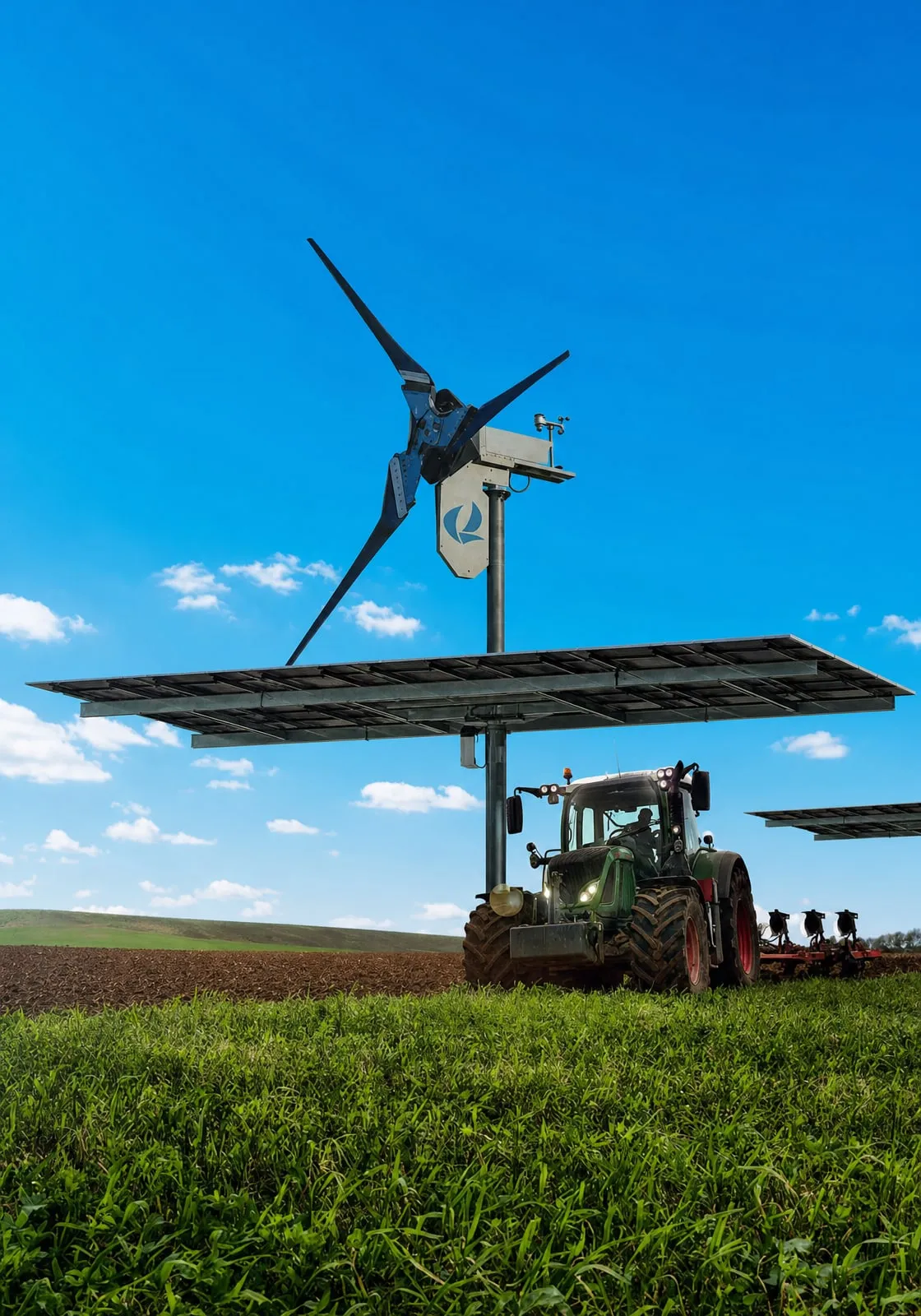
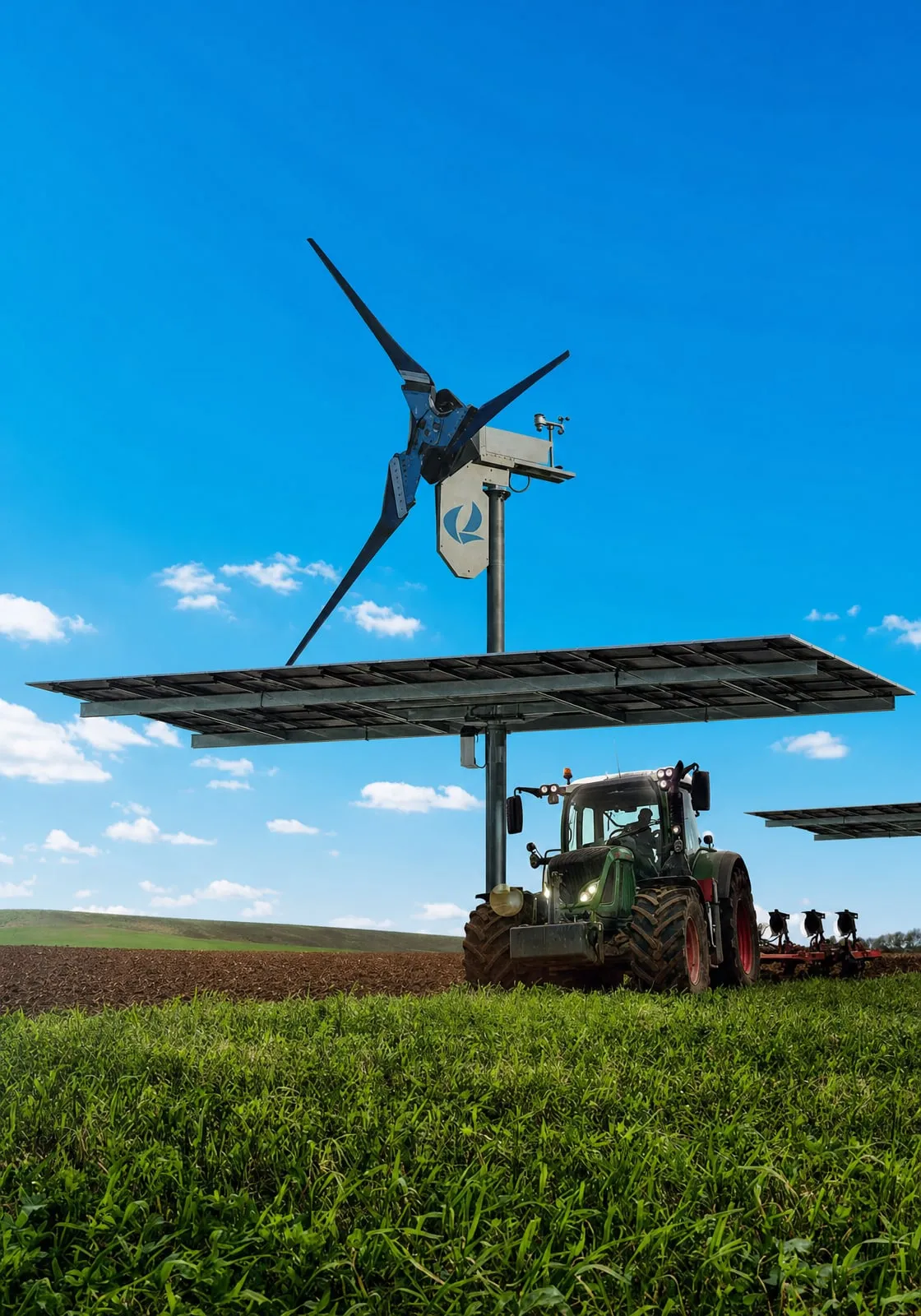
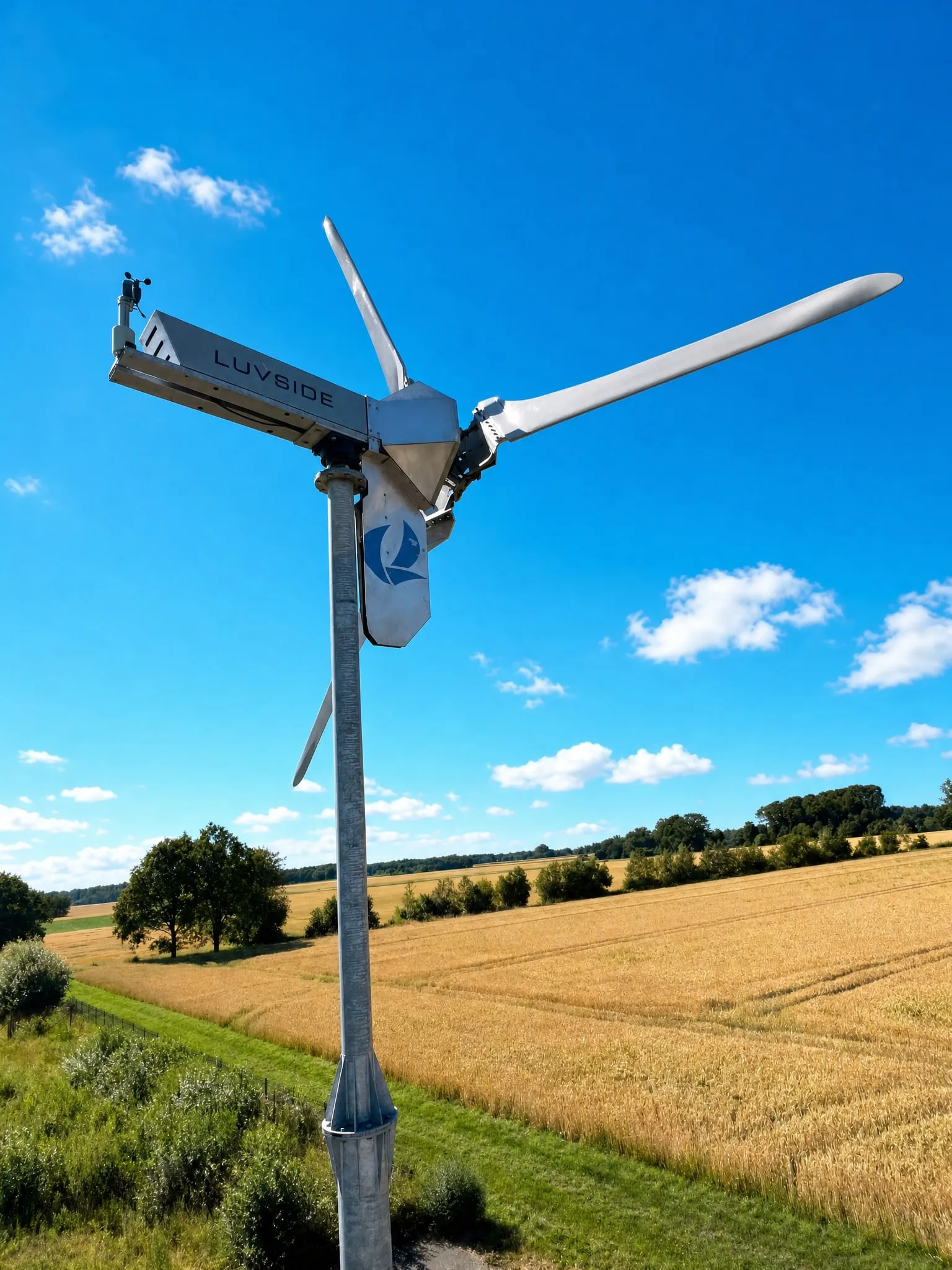
With WindSun, LuvSide combines photovoltaics and the horizontal LS HuraKan 8.0 wind turbine on a shared, concrete-free lightweight foundation. The solar tubes are mounted 4.5 metres above ground, so the land below can be farmed without restrictions.
Rain and sunlight reach the ground through the gaps between the tubes, and the round surface protects crops from hail and heavy rain. In hot regions, the shade reduces soil drying.
Solar produces at midday and in summer; wind often blows at night, in autumn and winter. That is exactly when many farms need power: for early-morning milking and milk cooling, for ventilation, lighting and heating in barns and greenhouses, and for drying and storage ventilation after harvest.
Together they produce a more even supply. Self-consumption rises, the battery can be smaller and the farm buys less expensive grid power. Read more about adding storage on our page wind solar hybrid system.
| Ground-mounted PV | Agrivoltaics | Agrivoltaics + wind turbine | |
|---|---|---|---|
| Farming on the land | largely lost (grazing sometimes possible) | continues on most of the area | continues; the turbine needs only a few square metres |
| Generation | daytime, mainly summer | daytime, mainly summer | also at night, in autumn and winter |
| Self-consumption on the farm | limited to daytime loads | limited to daytime loads | higher thanks to a more even profile |
| Storage for 24-hour supply | large | large | smaller |
| EU farm subsidies (CAP, Germany) | usually lost | land stays partly eligible | as agrivoltaics |
| Investment per kWp | lowest | higher, depending on design | plus wind turbine – see wind turbine cost |
A small wind turbine stands on a mast or foundation of a few square metres. The vertical LS Helix 3.0 has a diameter of 2.2 m and can also be mounted on buildings.
With WindSun, turbine and PV modules share one concrete-free lightweight foundation. The soil stays unsealed and is not compacted.
Agrivoltaic systems are designed so that agricultural use keeps priority. The German standard DIN SPEC 91434 limits land loss to 10 or 15% depending on the design.
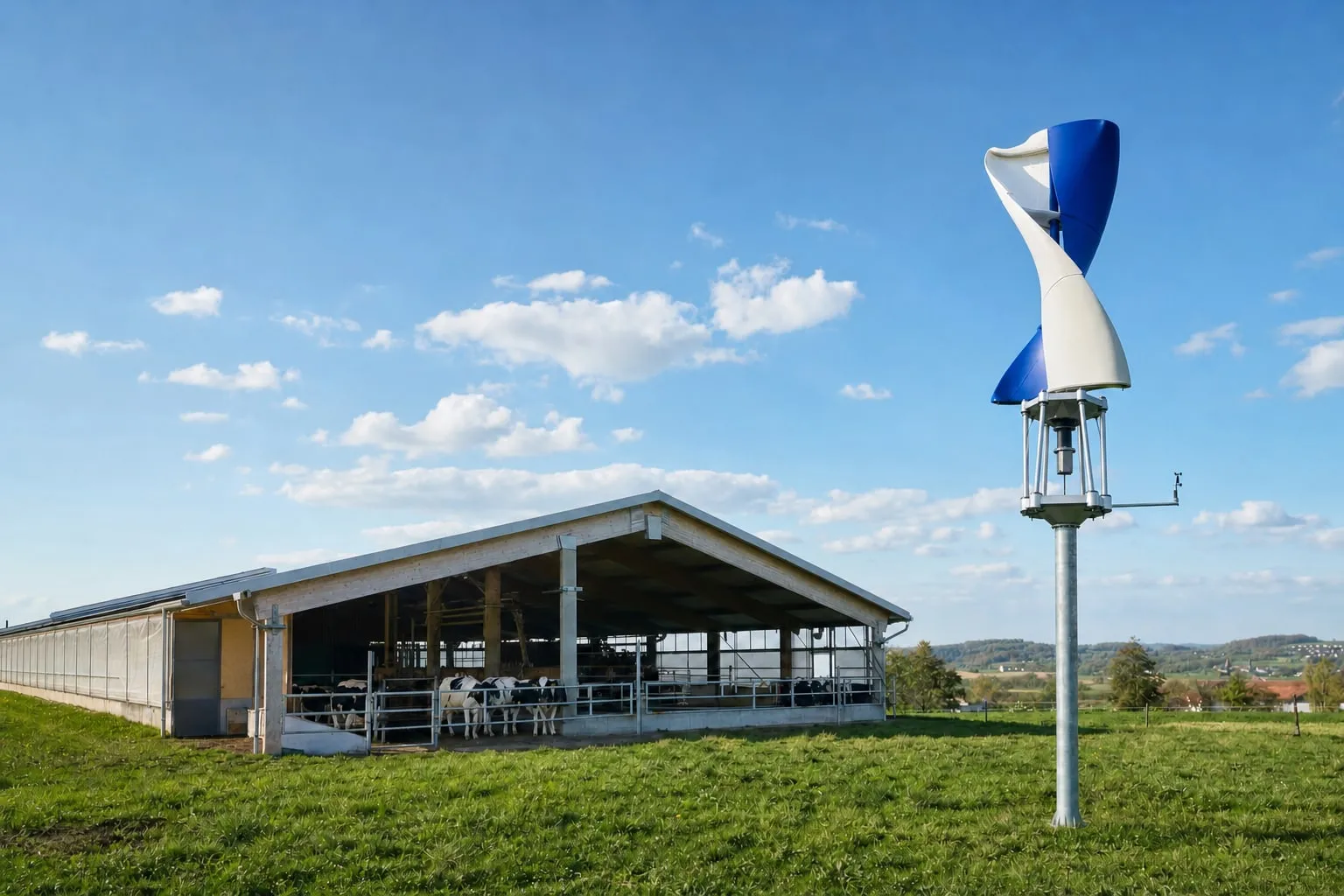
Milking, milk cooling, ventilation and feeding run around the clock – including when the PV system produces nothing.
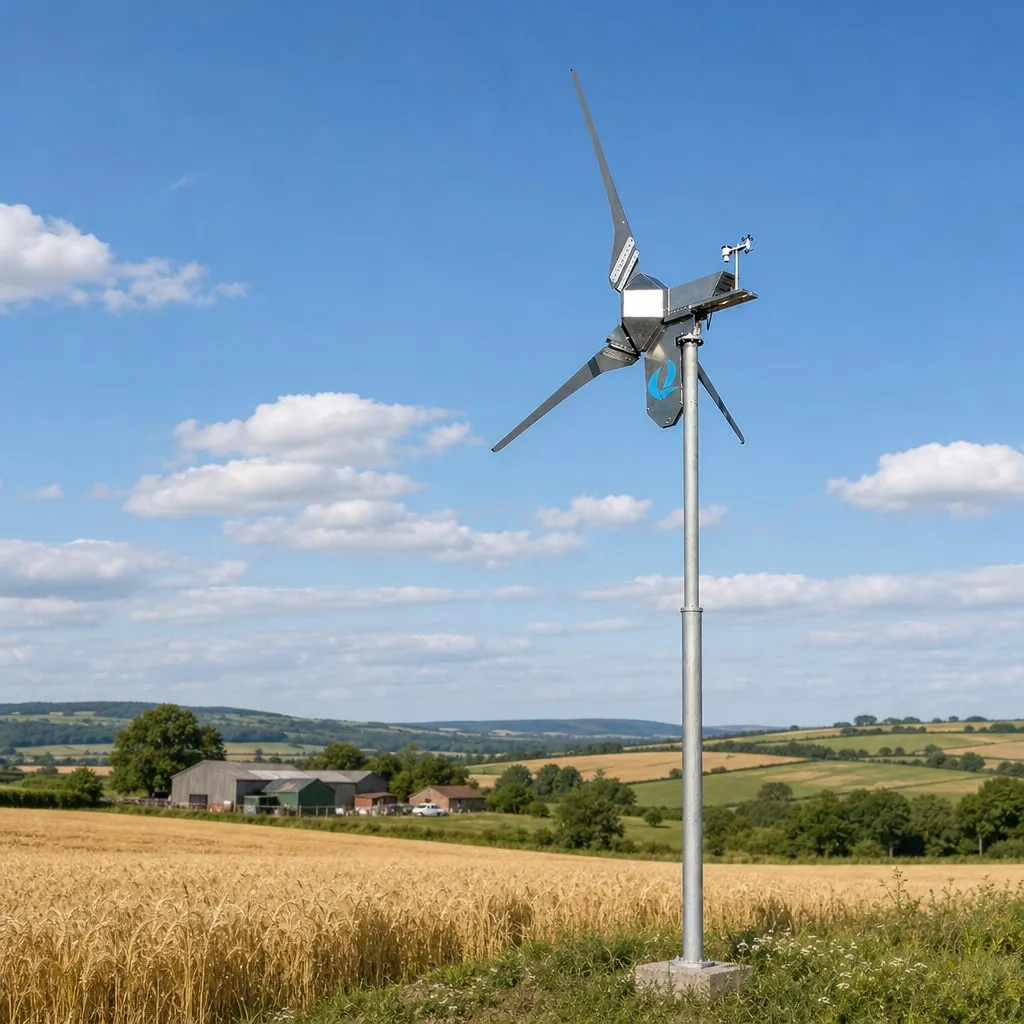
Grain drying, storage ventilation and cold stores peak after harvest – in the windier season.
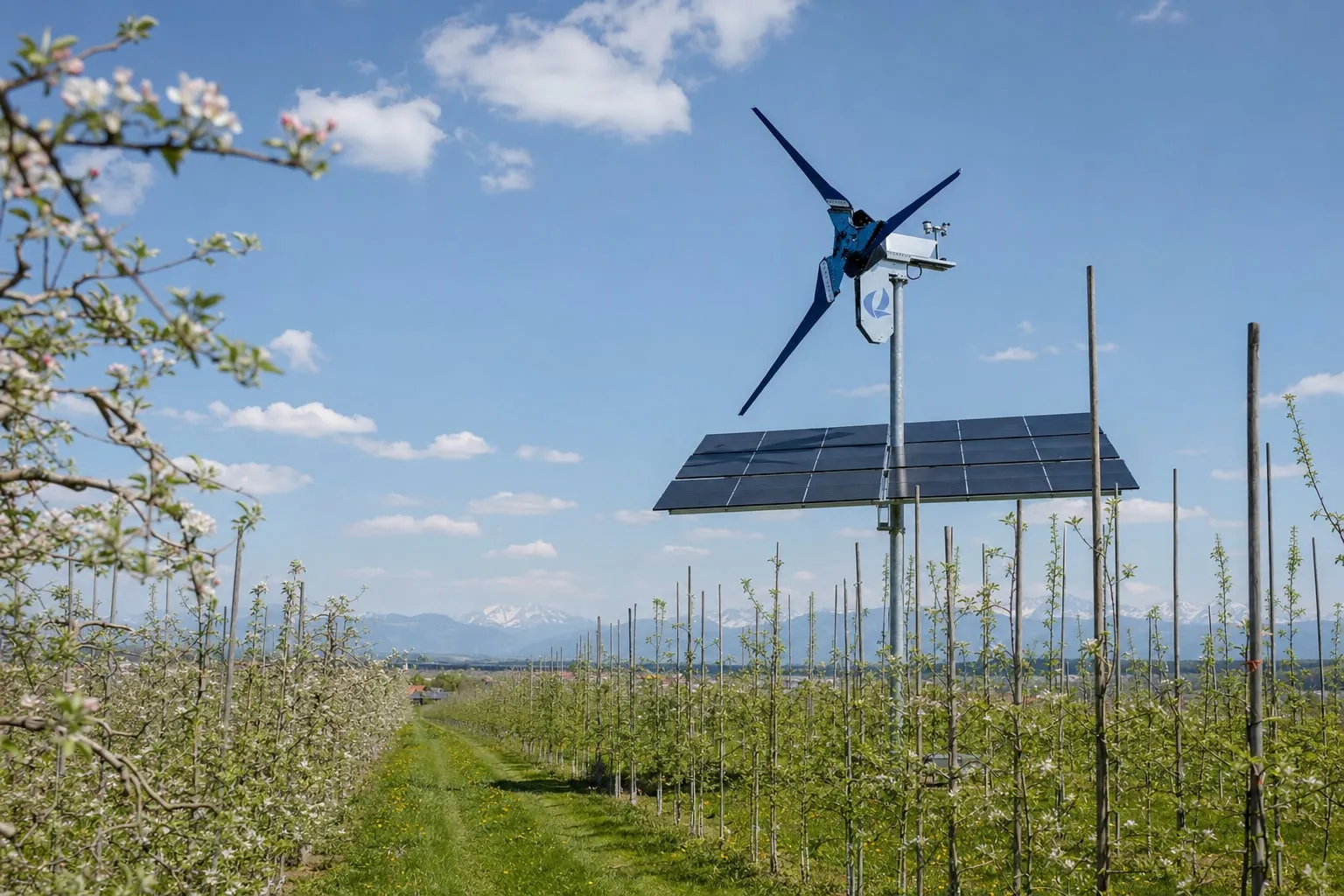
Elevated modules shade sensitive crops and protect them from hail and heavy rain.
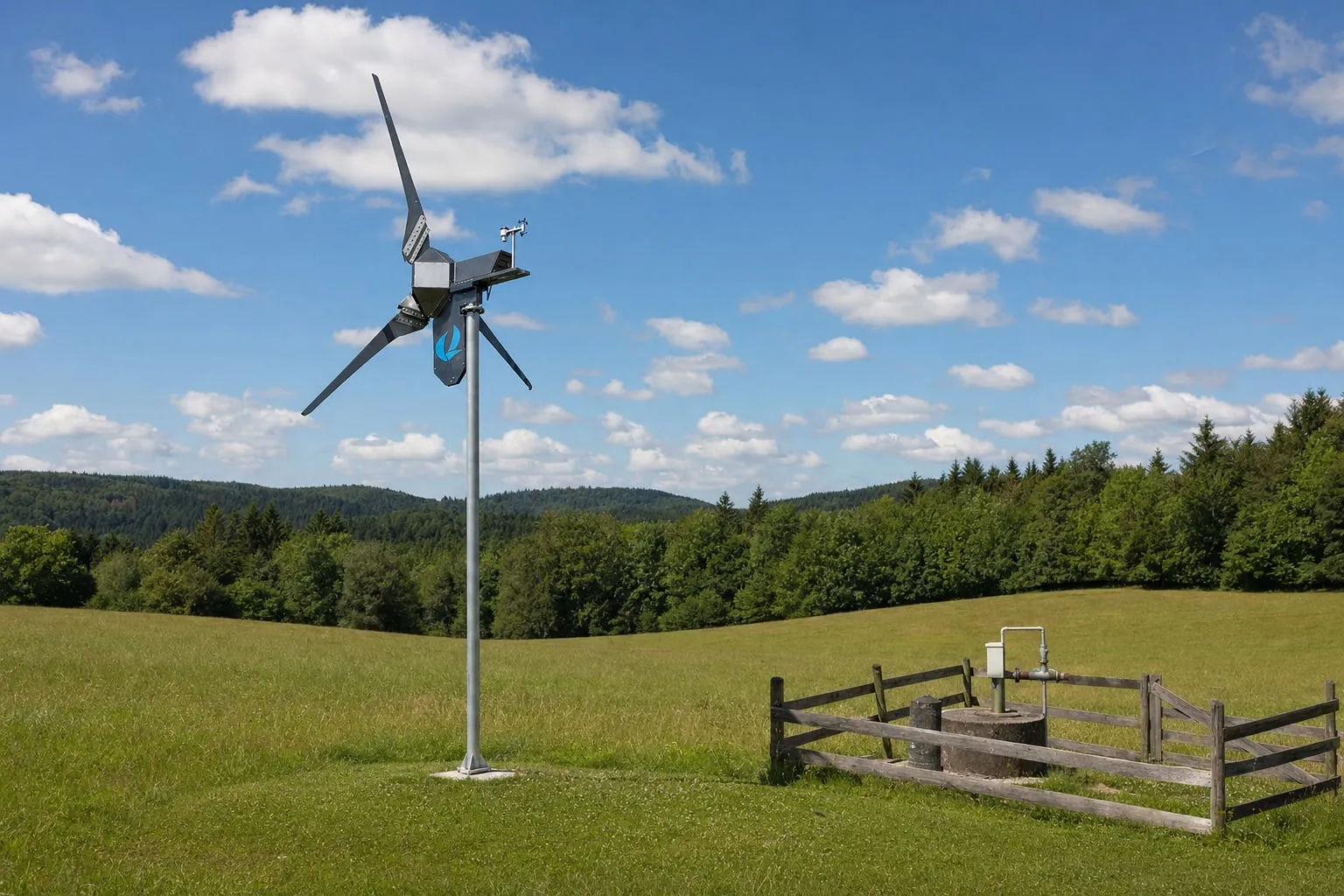
Pumps, livestock watering, electric fences and sensors far from the farm connection – as an off-grid system with battery.
Rules for agrivoltaics differ by country and are changing. The points below give a general overview of the German framework and do not replace legal or funding advice.
LuvSide develops and builds small wind turbines in Ottobrunn near Munich. For farms we recommend, depending on land and demand, the complete WindSun system, the horizontal LS HuraKan 8.0 for open land or the vertical LS Helix 3.0 for farmyards with buildings.
More about vertical axis wind turbinesHorizontal wind turbine & photovoltaics
Horizontal wind power turbine
Vertical wind turbine
LuvSide News, Wind Turbines, WindyBlog
How small wind turbines combined with solar help farms cut energy costs, gain independence and keep power flowing at night and in winter – updated for 2026 with costs and agrivoltaics.
More infoLuvSide News, Wind Turbines, WindyBlog
A step-by-step guide to choosing the right small wind turbine for your farm – from load profile and wind assessment to turbine type, sizing, 2026 costs, payback and permits.
More infoApplication & Operation, Horizontal Wind Power, LuvSide News, Vertical Wind Power, Wind Energy, Wind Turbines, WindyBlog
This article examines how combining wind turbines with solar panels creates cost synergies across fuel savings, maintenance reduction, optimized energy storage, and extended equipment lifespans—with practical guidance on system sizing, component selection, and implementation strategies that maximize return on investment.
More infoTell us about your land, crops and power demand. We assess wind conditions and permitting and propose the right system.
Private customer? Our distribution partners will be happy to advise you locally.