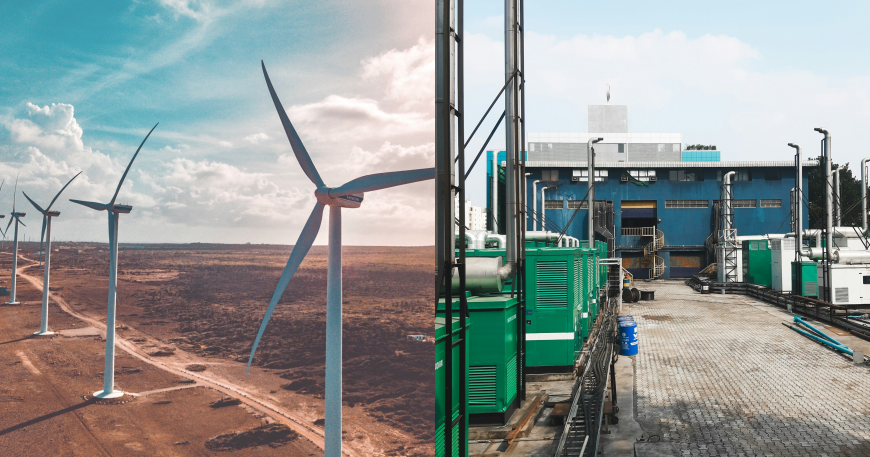
Off-Grid Energy: Small Wind Turbines vs Diesel Generator Performance
Remote power generation presents a fundamental choice between harnessing free wind energy and burning expensive diesel fuel. While diesel generators offer immediate reliability regardless of weather conditions, small wind turbines provide zero-emission electricity that can dramatically reduce long-term operating costs in locations with adequate wind resources.
This comparison examines power output capabilities, lifetime costs, maintenance requirements, and environmental impacts to help you determine which technology—or combination of both—delivers optimal performance for your specific off-grid energy needs.
Wind Turbine and Diesel Generator Basics for Remote Sites
Small wind turbines are renewable energy devices that convert moving air into electricity through spinning blades connected to a generator. They produce no fuel costs or emissions during operation, but they depend entirely on consistent wind speeds to generate power. Diesel generators burn fuel to mechanically turn electrical generators, delivering reliable electricity regardless of weather conditions but requiring continuous fuel supply and producing greenhouse gas emissions.
Both technologies serve locations where connecting to the main electrical grid isn’t possible or practical. Small wind turbines typically range from 400 watts to 100 kilowatts, while comparable diesel generators span 5 to 500 kilowatts. The key difference lies in their energy source—wind turbines harvest free wind energy, while diesel generators consume fuel that costs money and creates pollution.
Power Output and Fuel Consumption Comparison
Small Wind Turbine Energy Yield
Wind turbines start producing electricity when wind speeds reach about 3-4 meters per second, which feels like a gentle breeze. They hit their maximum power output at wind speeds between 10-15 meters per second—strong enough to make flags flap vigorously. However, wind doesn’t blow consistently, so these turbines only generate their rated power about 15% to 35% of the time, depending on how windy your location actually is.
Since wind comes and goes, you’ll need batteries to store extra electricity when it’s windy for use during calm periods. This intermittent nature means wind turbines work best as part of a larger energy system rather than standalone power sources.
Diesel Generator Fuel Use and Derating
Diesel generators burn roughly 0.25 to 0.30 liters of fuel for every kilowatt-hour of electricity they produce when running at optimal capacity. Yet here’s the catch—they become much less efficient when running below half their rated power, which happens frequently in off-grid situations where power demands vary throughout the day.
High altitude and extreme temperatures reduce generator performance through a process called derating. At 3,000 meters elevation, generators lose 15-20% of their power capacity, while temperatures above 40°C can cut another 5-10% from their output.
Lifetime Cost of Electricity in Off-Grid Applications
Capital Expenditure Breakdown
Installing a small wind turbine system costs between $3,000 to $8,000 per kilowatt of capacity. This price includes the turbine itself, the tower, concrete foundation, and electrical components like inverters and controllers. Installation costs vary widely based on how difficult it is to reach your site and local labor rates.
Diesel generators cost much less upfront—typically $800 to $2,000 per kilowatt for the generator plus fuel storage tanks and electrical connections. However, this lower initial price doesn’t account for the fuel you’ll buy over the generator’s lifetime, which often exceeds the equipment cost within just a few years.
Operating and Fuel Costs
Wind turbines have minimal ongoing expenses beyond annual maintenance checks and eventual part replacements. You’ll typically spend 1-3% of the initial system cost each year on upkeep, which mainly involves checking bolts, cleaning components, and replacing worn parts.
Diesel generators face substantial recurring costs that never stop. Fuel expenses alone can cost more than the generator within 2-3 years of operation. Add scheduled maintenance like oil changes every 250-500 operating hours, plus filter replacements and cooling system upkeep, and the costs accumulate quickly.
- Remote fuel delivery: Transporting diesel to isolated locations can cost 2-5 times normal fuel prices
- Engine overhauls: Major rebuilds every 10,000-15,000 hours add significant expense
- Spare parts inventory: Filters, belts, and fluids require ongoing storage and replacement.
Levelised Cost of Energy Calculation
The levelised cost of energy divides all lifetime expenses by total electricity production over the system’s operational life. Small wind turbines typically achieve costs of $0.10 to $0.25 per kilowatt-hour in locations with good wind resources.
Diesel generators show much higher lifetime costs of $0.30 to $0.80 per kilowatt-hour, driven primarily by fuel expenses that continue for the generator’s entire life. In remote locations where fuel delivery is expensive, diesel costs can exceed $1.00 per kilowatt-hour.
Reliability and Maintenance Logistics in Harsh Locations
Scheduled Service Intervals
Wind turbines require annual inspections covering blade condition, tower bolts, electrical connections, and oil levels in geared models. Most maintenance tasks can be completed by trained technicians using standard tools, and many checks can be performed from the ground level.
Diesel generators demand much more frequent attention with oil changes every few weeks of operation, along with air filter, fuel filter, and coolant system maintenance. These short intervals create logistical headaches in remote locations where bringing technicians to the site costs significant time and money.
Unplanned Failure Rates
Modern small wind turbines experience unexpected downtime about 2-5% of the year, often due to control system glitches or automatic shutdowns during extreme weather. Most failures allow the turbine to stop safely without major damage, and repairs typically involve replacing electronic components rather than heavy mechanical parts.
Diesel generators face higher failure rates as operating hours accumulate, especially in dusty or salty environments. Common problems include clogged fuel systems, coolant leaks, and starter motor failures that can leave your site completely without power until repairs are completed.
Spare Parts and Crew Access
Wind turbine spare parts focus on compact electrical components, brake pads, and control modules that can be stored on-site or shipped quickly when needed. Most replacement parts are lightweight and don’t require specialized heavy equipment for installation.
Diesel generator maintenance requires bulky items like multiple types of filters, belts, coolant, and engine oil that consume valuable storage space. Major repairs might require engine parts or specialist diesel mechanics, creating longer periods without power while waiting for parts or expertise to arrive.
Environmental Impact and Emissions Profile
Greenhouse Gas Emissions
Wind turbines produce zero emissions during operation and typically offset the carbon footprint from their manufacturing and installation within 6-12 months. Over a 20-year lifespan, wind systems reduce greenhouse gas emissions by about 93% compared to diesel generators producing the same amount of electricity.
Diesel generators emit approximately 2.6 kilograms of carbon dioxide for every liter of fuel burned, plus nitrogen oxides and particulate matter that affect local air quality. A 20-kilowatt generator running 8 hours daily produces roughly 15 tonnes of CO₂ annually—equivalent to burning about 6,500 liters of fuel.
Noise and Local Pollution
Small wind turbines generate 35-45 decibels at typical installation distances, which sounds similar to a quiet library or gentle rainfall. Modern designs with aerodynamic blades and proper installation create minimal noise disturbance.
Diesel generators produce 60-80 decibels during operation—loud enough to require hearing protection for nearby workers. The constant engine noise often necessitates sound enclosures or remote placement to avoid disturbing daily activities, and exhaust fumes create air quality concerns in enclosed spaces.
Hybrid Wind Solar Diesel Strategies for 24/7 Supply
Wind-Battery-Diesel Dispatch Logic
Smart control systems automatically prioritize renewable energy sources while starting diesel backup only when battery charge drops below safe levels. These controllers continuously monitor wind speed, battery voltage, and power demand to make optimal energy decisions without human intervention.
Advanced systems can even predict weather patterns and adjust charging strategies to maximize renewable energy use. The diesel generator operates only when wind power and stored battery energy can’t meet your electricity needs, minimizing fuel consumption and emissions.
Adding Solar to Smooth Seasonal Gaps
Solar panels complement wind energy perfectly because they often produce peak power during different seasons and times of day. While wind resources frequently peak during winter months, solar generation maximizes during summer, creating year-round energy diversity that reduces reliance on diesel backup.
Combined wind-solar systems require smaller battery banks compared to single-source renewable installations. This diversity also decreases diesel runtime, extending engine life and reducing fuel costs significantly.
Intelligent Controllers and Remote Monitoring
SCADA systems enable unmanned operation through cellular or satellite connections that monitor system performance and alert operators to maintenance needs. Remote diagnostics can identify developing problems before they cause complete system failures, preventing costly emergency service calls.
Predictive maintenance algorithms analyze operating data patterns to schedule service visits efficiently. This approach reduces unnecessary site visits while preventing unexpected downtime through proactive component replacement based on actual wear patterns rather than arbitrary time schedules.
Step-By-Step System Sizing and Resource Assessment
Wind Resource Measurement
Professional wind measurement involves installing anemometers at the proposed turbine height for at least 12 months to capture seasonal variations and local wind patterns. Wind speed distribution analysis reveals what percentage of time different wind speeds occur, which directly affects how much electricity your turbine will actually produce.
Turbulence measurements identify sites with smooth airflow versus gusty conditions that reduce turbine efficiency and increase wear. Professional wind assessments cost $5,000-$15,000 but provide essential data for accurate system sizing and realistic performance expectations.
Load Profiling and Autonomy Target
Electrical load analysis documents your actual power consumption patterns throughout daily and seasonal cycles. Peak demand calculations determine the maximum instantaneous power requirement that your system sizing accommodates, while average consumption affects battery storage needs.
Autonomy targets define how long your system operates without wind or sun—typically 3-7 days for critical applications. This requirement directly influences battery bank sizing and backup generator capacity, balancing reliability against system cost.
Battery Bank and Inverter Selection
Lithium iron phosphate batteries offer optimal performance for off-grid applications with 4,000-6,000 cycle lifespans and tolerance for temperature extremes. Battery capacity sizing accounts for daily energy needs multiplied by autonomy days, adjusted for depth of discharge limitations that preserve battery life.
Pure sine wave inverters convert DC battery power to AC electricity compatible with standard appliances and equipment. Inverter sizing considers both continuous load requirements and surge capacity needed for motor starting applications like water pumps or refrigeration compressors.
Regulatory and Logistical Considerations for Off-Grid Projects
Permitting and Zoning for Small Wind
Local zoning ordinances typically require setback distances equal to 1.5 times tower height from property boundaries, while height restrictions may limit installations near airports or communication facilities. Most jurisdictions classify small wind turbines differently from utility-scale projects, often allowing streamlined permitting processes.
Environmental impact assessments focus on noise levels, visual impact, and wildlife considerations, though small turbines generally pose minimal environmental concerns compared to large commercial installations.
Fuel Transport and Storage Rules
Hazardous materials regulations govern diesel storage quantities, spill containment requirements, and fire safety measures. Above-ground tanks exceeding 1,000 liters often require secondary containment systems and regular inspections to prevent environmental contamination.
Fuel quality degrades over time through oxidation and microbial growth, requiring fuel conditioning additives and periodic testing. Water contamination becomes particularly problematic in humid environments or areas with significant temperature fluctuations.
Incentives and Carbon Credits
Federal and regional tax credits can offset 30-50% of renewable energy system costs in many jurisdictions, while grant programs specifically target rural and remote area electrification projects. These incentives significantly improve the economics of wind-hybrid systems compared to diesel-only solutions.
Carbon offset markets provide additional revenue streams for documented emission reductions. Small wind projects can generate verified carbon credits worth $10-$50 per tonne of CO₂ avoided, though the administrative requirements may limit participation to larger installations.
Achieving Energy Independence With LuvSide Small Wind Solutions
Choosing between small wind turbines and diesel generators depends on site-specific factors including wind resources, fuel accessibility, and long-term energy costs. Wind-hybrid systems excel in locations with consistent wind patterns and expensive fuel delivery, while diesel generators suit applications requiring guaranteed power regardless of weather conditions.
LuvSide’s compact wind turbines and hybrid wind-solar systems are engineered for harsh environments and remote installations where reliability is paramount. Our vertical and horizontal axis designs integrate seamlessly with existing infrastructure while providing energy independence that reduces operational costs and environmental impact.
Contact us to discuss your renewable energy needs or request a consultation (https://www.luvside.de/kontakt/)
FAQs About Small Wind Turbines and Diesel Generators
How much average wind speed do small wind turbines need to generate power?
Most small wind turbines begin generating electricity at wind speeds around 3-4 meters per second, with optimal power production occurring at 10-15 meters per second.
Can I retrofit a small wind turbine into my existing diesel generator system?
Yes, small wind turbines can be integrated with existing diesel systems through hybrid controllers that automatically switch between power sources and manage battery charging.
What battery chemistry works best for remote wind-diesel hybrid systems?
Lithium iron phosphate batteries offer the best combination of cycle life, temperature tolerance, and maintenance requirements for remote off-grid applications.
How loud are small wind turbines compared to diesel generators?
Small wind turbines typically produce 35-45 decibels at residential distances, significantly quieter than diesel generators which generate 60-80 decibels during operation.
What happens during prolonged calm weather or severe storm conditions?
Hybrid systems automatically switch to diesel backup during extended low-wind periods, while turbines have built-in storm protection that shuts them down safely during extreme weather.
Related Content
This article examines how combining wind turbines with solar panels creates cost synergies across fuel savings, maintenance reduction, optimized energy storage, and extended equipment lifespans—with...
This guide covers the maintenance strategies, component priorities, and technologies that keep remote wind systems running reliably despite distance and harsh conditions. You'll learn how...